Childhood ADHD Linked to Distinct Brain White Matter Changes
A study analyzing data from the Adolescent Brain and Cognitive Development Study (ABCD Study) found that children with ADHD show reduced glial cellularity and axonal organization in white matter tracts, with these changes persisting into early adolescence. The research highlights the neural basis of ADHD and its impact on brain development.

A new study published in Biological Psychiatry: Cognitive Neuroscience and Neuroimaging reveals that children with attention-deficit/hyperactivity disorder (ADHD) exhibit distinct developmental changes in brain white matter. The research, led by L. Nate Overholtzer and colleagues, analyzed data from the Adolescent Brain and Cognitive Development Study (ABCD Study) to explore how ADHD affects white matter microarchitecture during early adolescence.
White Matter Changes in Children with ADHD
The study found that children with ADHD showed reduced glial cellularity in 20 white matter tracts at age 9, as indicated by decreased restricted normalized isotropic diffusion (RNI). Additionally, there were enduring reductions in axonal organization, measured by restricted normalized directional diffusion (RND), in 16 white matter tracts between ages 9 and 14. These findings suggest that ADHD is associated with atypical glial cellularity and axonal organization during critical periods of brain development.
| Measure | Age 9 Findings | Ages 9-14 Findings |
|---|---|---|
| RNI (Glial Cellularity) | Reduced in 20 white matter tracts | Not specified |
| RND (Axonal Organization) | Not specified | Reduced in 16 white matter tracts |
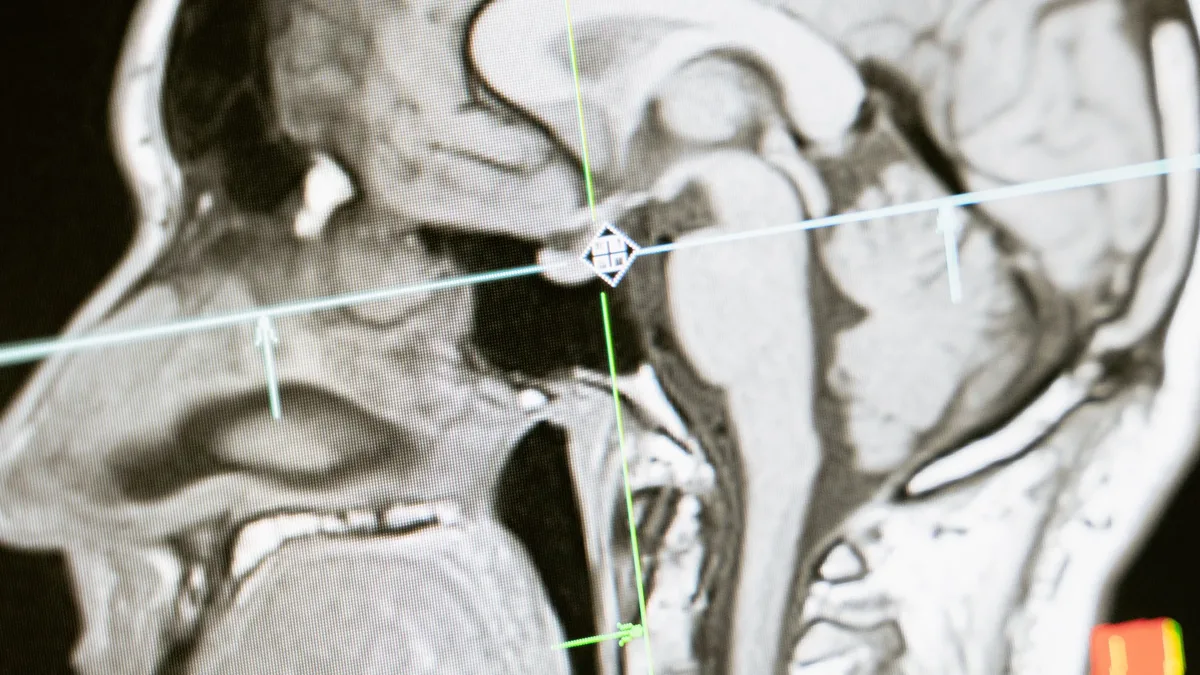
The researchers used advanced diffusion magnetic resonance imaging (MRI) scans to assess these changes. The study also noted that the narrowing of isotropic diffusion differences between children with and without ADHD paralleled an overall age-related drop in ADHD symptoms.
Study Methodology and Limitations
The study analyzed data from the ABCD Study, a long-term U.S. research project tracking thousands of children into adulthood. Data was collected at enrollment (2016-2018), 2 years later (2018-2020), and 4 years later (2020-2022). The number of participants decreased over time, from 9,426 at the start to 6,745 in year 2 and 2,483 in year 4. At the start, 1,150 participants (12.2%) had ADHD, with 658 taking medication. In year 2, 763 participants (11.3%) had ADHD, and in year 4, 294 (11.8%) had ADHD.
Participants using non-ADHD psychiatric medications were excluded to avoid confounding factors. ADHD diagnosis was based on caregiver responses to the Kiddie Schedule for Affective Disorders and Schizophrenia (KSADS) and the Medication Inventory Survey (MIS).
The study contributes to understanding the neural basis of ADHD but was limited by smaller sample sizes in later waves due to ongoing data collection and higher exclusion rates among children with ADHD. These factors may affect the generalizability of the results.
The paper, titled Developmental Differences in White Matter Microarchitecture in Youth with ADHD: Longitudinal Findings from the ABCD Study, was authored by L. Nate Overholtzer, Katherine L. Bottenhorn, Hedyeh Ahmadi, Sarah L. Karalunas, Bradley S. Peterson, and Megan M. Herting.