Inflammation's Two Paths to Alzheimer's
A new study identifies two distinct inflammatory pathways in Alzheimer's disease, each linked to different types of brain damage that converge to cause
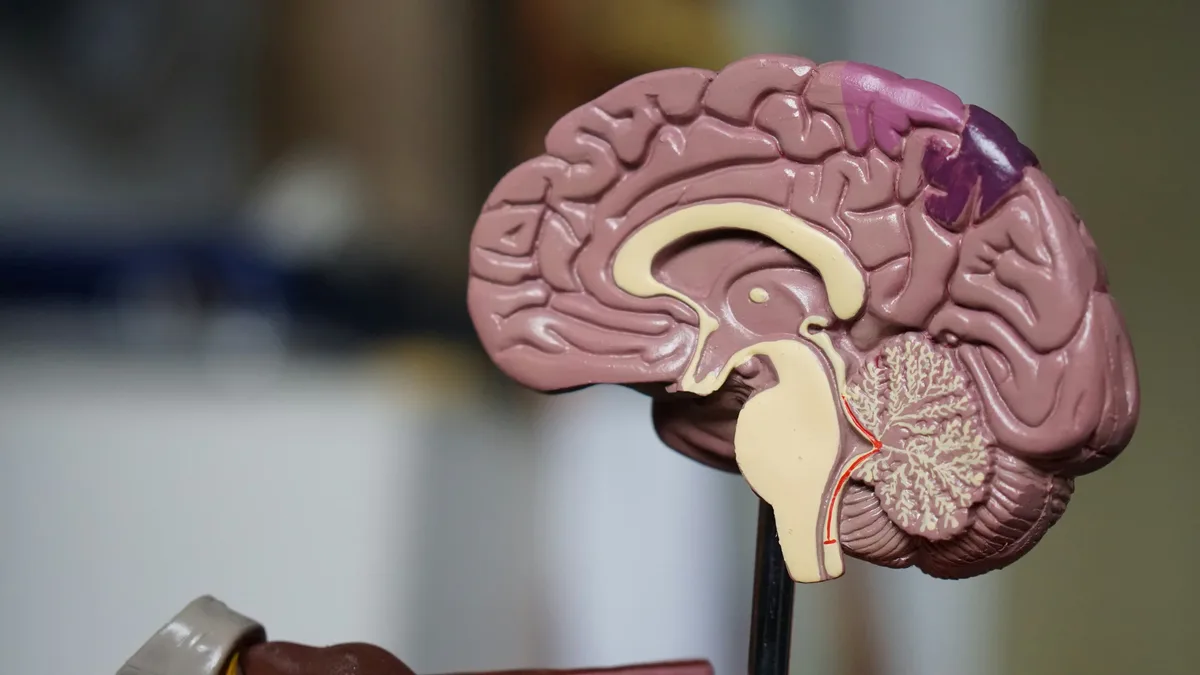
A new study published in Alzheimer’s & Dementia: Diagnosis, Assessment & Disease Monitoring has found evidence that two separate inflammatory proteins in the blood signal two distinct paths of brain damage, both leading to memory problems. The research, involving 126 cognitively unimpaired older adults with an average age of 70, suggests brain inflammation plays an early role in Alzheimer's disease.
Researchers Michael A. Yassa and Batool Rizvi noted the literature on inflammation in Alzheimer's has been inconsistent. "That made us wonder whether we were trying to fit several different biological processes into a single pathway," they said. The team hypothesized that different forms of neuroinflammatory activity might be associated with different aspects of the disease.
Mapping the Inflammatory Pathways
The scientists collected blood to measure levels of three proteins: YKL-40, GFAP, and p-tau217. Participants also underwent MRI and PET brain scans and completed neuropsychological assessments, including the Rey Auditory Verbal Learning Test. The team used structural equation modeling to test proposed chains of cause and effect by examining how these variables interacted.
The modeling revealed two separate pathways. Higher blood levels of YKL-40 were associated with more white matter damage, indicated by white matter hyperintensities on MRI scans. However, YKL-40 levels did not relate to amyloid plaque buildup.
A Divergence in Damage
In contrast, higher levels of the inflammatory protein GFAP were associated with increased amyloid plaque buildup, as measured by PET scans. GFAP levels did not relate to white matter damage. This provides evidence that YKL-40 and GFAP represent two parallel, independent tracks of neuroinflammation.
"What surprised us was how clearly the two inflammatory markers separated," the researchers noted. "That suggests that calling something simply 'neuroinflammation' may obscure important biological differences."
Despite their separate tracks, both white matter damage and amyloid plaque accumulation independently linked to higher blood levels of p-tau217, a marker of tau protein tangles. Both vascular damage and amyloid pathology appear to converge, promoting toxic tau accumulation.
Convergence on Memory Loss
Following this convergence, the pathway led directly to structural brain changes and cognitive deficits. Higher levels of p-tau217 were associated with a thinner medial temporal lobe cortex and a smaller hippocampal volume. A smaller hippocampus was then associated with worse memory performance on the word-recall test, specifically on a measure called retroactive interference.
"So rather than seeing Alzheimer’s disease as a single chain of events, our findings suggest that several biological processes may be occurring in parallel and ultimately contributing to the same downstream brain changes," the authors said.
The study has limitations. It relied on observational data collected at a single point in time, which restricts confirming a strict cause-and-effect sequence. "The most important limitation is that this was a cross-sectional study," the researchers explained. The participant sample was also relatively modest and predominantly White, limiting how broadly the findings can be generalized.
Future research will need to track individuals over many years to verify the temporal sequence. The researchers hope to use combinations of blood biomarkers and brain scans to identify distinct biological profiles of Alzheimer’s risk. "The broader point is that Alzheimer’s disease is biologically heterogeneous," they noted.