
Dating And Meeting People
| Relationship situation | Early dating or meeting new people |
|---|---|
| Skill that helps | Social confidence and conversation |
| Original use | Facilitating initial connection and conversation |
| First created | 20th century |
| Ideal group size | Two to a small group |
| Typical duration | One to three hours |
| Common setting | Public, casual venue |
| Key activity | Facilitated conversation or shared experience |
Origin and history
The concept of "Dating And Meeting People" as a distinct category of social activity is a modern construct, emerging primarily in Western cultures during the late 20th century. Its formalization is linked to the shift from courtship rituals supervised by families and communities to individualistic, socially fluid pursuits for companionship. The proliferation of dedicated literature, advice columns, and eventually digital platforms in the 1990s and 2000s cemented it as a recognized field of personal development. This categorization arose alongside the decline of traditional meeting institutions like community dances and the rise of urban, mobile populations. It reflects a societal focus on intentional relationship-building outside established social circles. The terminology itself gained prominence through self-help books and early internet forums dedicated to social skills and relationship advice.
What it is for
This category addresses the foundational stage of romantic relationships: initiating contact and establishing a connection with potential partners. Its primary purpose is to provide structured social strategies for individuals who find the process of meeting new people challenging or unstructured. It serves to reduce the ambiguity and anxiety associated with modern romance by offering frameworks for interaction. The focus is on developing the practical skill of moving from stranger to acquaintance in a romantic context, which is a separate skill from maintaining a long-term relationship. It is for navigating environments where romantic opportunities are not automatically provided by one's immediate community or workplace. Ultimately, it aims to convert random chance into manageable opportunity through deliberate action and improved social perception.
Dating And Meeting People date ideas
Date ideas in this context prioritize environments and activities that facilitate low-pressure conversation and mutual discovery. Effective ideas include attending a public lecture or museum exhibit, which provides built-in conversation topics and allows for focus on the activity during lulls in dialogue. Visiting a bustling farmers' market or street festival offers a dynamic setting with numerous visual stimuli to comment on and share. Participating in a beginner-friendly group class, such as pottery or a cooking workshop, creates a cooperative, task-oriented environment that reduces intense one-on-one scrutiny. Taking a walk in a popular park or botanical garden allows for movement and side-by-side conversation, which can feel less confrontational than sitting across a table. The unifying principle is selecting a public, activity-based venue that minimizes pressure and maximizes natural interaction points.
Date night ideas Dating And Meeting People
Date night ideas here are specifically designed for evenings and focus on creating a slightly more intimate atmosphere while still maintaining a comfortable escape route. Attending a live performance at a small comedy club or jazz bar provides shared entertainment and topics for discussion during intermission or after the show. Visiting a well-lit arcade or bowling alley introduces playful, nostalgic competition that can ease tension and foster camaraderie. Exploring a neighborhood known for its food trucks or dessert cafes allows for a progressive, informal tasting experience without the commitment of a full sit-down meal. Going to a planetarium show or an observatory offers a unique, awe-inspiring shared experience in a quiet, darkened setting that encourages whispered conversation. The key is balancing structured activity with opportunities for personal exchange in a setting that feels safe and engaging for both parties.
Overview
Dating And Meeting People is a practical framework encompassing the mindset, skills, and tactics required to initiate romantic connections in contemporary society. It operates on the premise that finding a partner is a learnable skill involving social navigation, self-presentation, and opportunity creation. This framework distinguishes itself from general socializing by its specific goal-orientation toward romantic beginnings. It acknowledges the modern reality that many adults must actively seek partners outside their pre-existing social networks. The approach typically combines internal work on confidence and communication with external strategies for placing oneself in conducive environments. It is a systematic response to the unstructured nature of modern romance, providing a toolkit for the initial phases of relationship formation.
What to know
Success in this area relies more on consistent exposure and resilience than on any single perfect technique, as rejection is an inherent and common part of the process. The skill is less about being universally appealing and more about efficiently finding mutual compatibility through repeated, low-stakes interactions. Non-verbal communication, such as open body language and appropriate eye contact, often carries more weight in initial meetings than clever conversation. The environments you choose significantly impact outcomes, with repeated, casual exposure in group settings often leading to more natural connections than high-pressure direct approaches. It is crucial to manage expectations, understanding that most meetings will not lead to romance, and to view each interaction as practice. A focus on being genuinely interested, rather than solely trying to be interesting, forms the bedrock of effective connection.
Common questions
A frequent question is how to approach someone without appearing intrusive or creating discomfort, which is best addressed by reading social cues and choosing public, social settings designed for mingling. People often ask how to transition a friendly acquaintance into a romantic date, which typically requires a clear, low-pressure verbal invitation for a specific one-on-one activity. Many inquire about the role of online dating within this skill set, which is generally viewed as a tool for increasing initial contact volume but still requiring the same fundamental in-person skills. A common concern is how to handle rejection gracefully, which involves pre-accepting it as a statistical inevitability and not a personal indictment. Individuals often question how to signal romantic interest platonically, a skill practiced through calibrated compliments and finding reasons for continued, slightly more personal contact. People also regularly seek advice on conversation starters, with effective ones usually being observational, context-specific, and open-ended rather than generic or interview-style.
Pros and cons
A significant pro is the empowerment that comes from developing a proactive, skill-based approach, reducing feelings of helplessness or reliance on luck in one's romantic life. This framework provides concrete actions to take, which can alleviate anxiety by replacing vague wishes with specific behaviors and goals. A major con is the risk of the process becoming mechanical or transactional, where the human element of connection is lost to a checklist of techniques, leading to inauthentic interactions. Individuals often regret an over-focus on "success metrics" like number of exchanges, which can create burnout and cynicism, making the process feel like a chore rather than a human pursuit. The common mistake is investing heavily in perfecting a "pickup" or opening line while neglecting the more critical skills of active listening and empathetic conversation that build real rapport. Another downside is the potential for increased discouragement during inevitable dry spells, which can be misinterpreted as personal failure rather than the normal variance of social dynamics.
Who it suits
This approach best suits individuals who are new to a city, have recently left a long-term relationship, or whose social circles no longer provide avenues for meeting potential partners. It is appropriate for people who are analytically minded and benefit from breaking down a seemingly nebulous social process into learnable components and actionable steps. It suits those who possess a degree of resilience and are willing to tolerate rejection as part of a larger statistical process toward finding compatibility. This framework is less suited for individuals seeking deep, immediate emotional connection from the first interaction, as the initial phase is inherently more exploratory and surface-level. It is also a poor fit for people who are deeply uncomfortable with any form of initiated social risk, as the process requires stepping outside a passive role. Ultimately, it serves those who believe that their romantic life is an area they can influence through deliberate effort and improved social skills.
Latest Dating And Meeting People news
Latest reporting
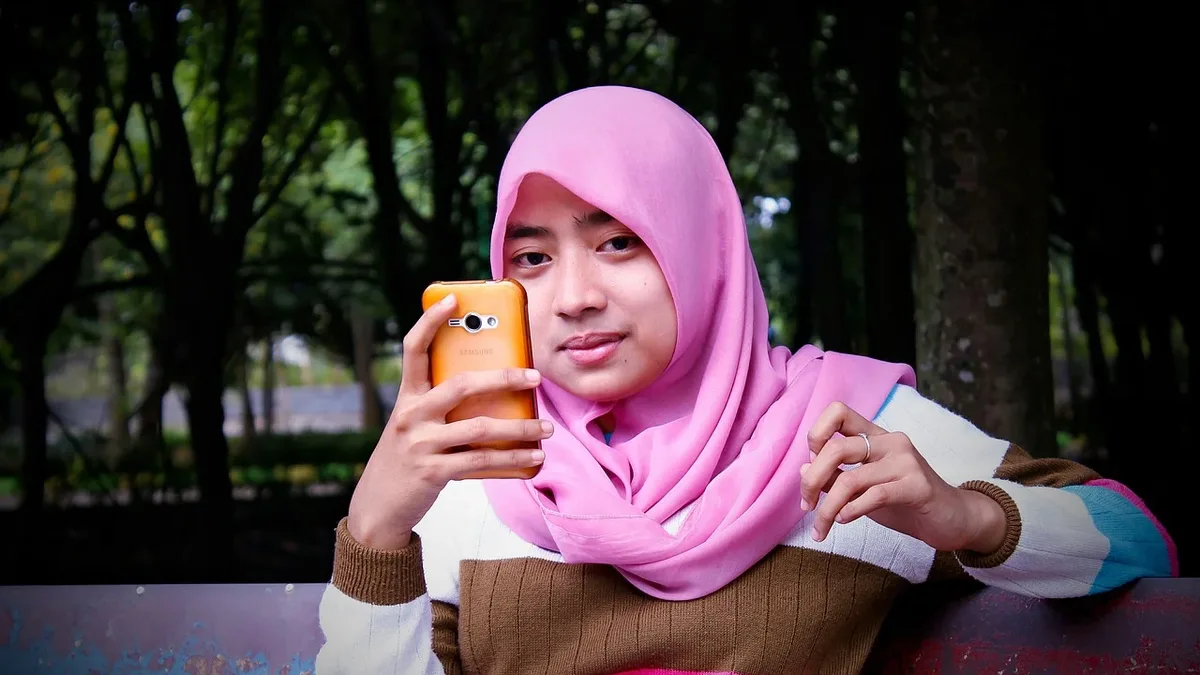
Religious women more receptive on dating
A new study finds women's religious beliefs influence their swiping behavior on apps like Tinder, with more religious women showing broader initial

Blind Date Ends With Hug, Plans for Second Meeting
A Guardian blind date between Joe and Jade scored an 8 and a 9, ending with a hug and exchanged numbers. They discussed Doctor Who, the housing...

Problematic dating app and porn use linked
A new study finds compulsive use of dating apps and pornography is associated with viewing romantic love as less existentially meaningful and more as...

Study: Dating motivation shapes relationship
New psychology research finds that single people's underlying motivations for seeking a partnership directly influence the type of relationship goals...

Lost number text reconnects couple for lasting relationship
A woman who lost a man's number after a chance meeting later received his text just as she was deactivating her old phone, leading to a long-distance

Study: Singles, unhappy partners bond more
New research finds single people and those dissatisfied with their relationships form stronger romantic attachments to fictional media characters